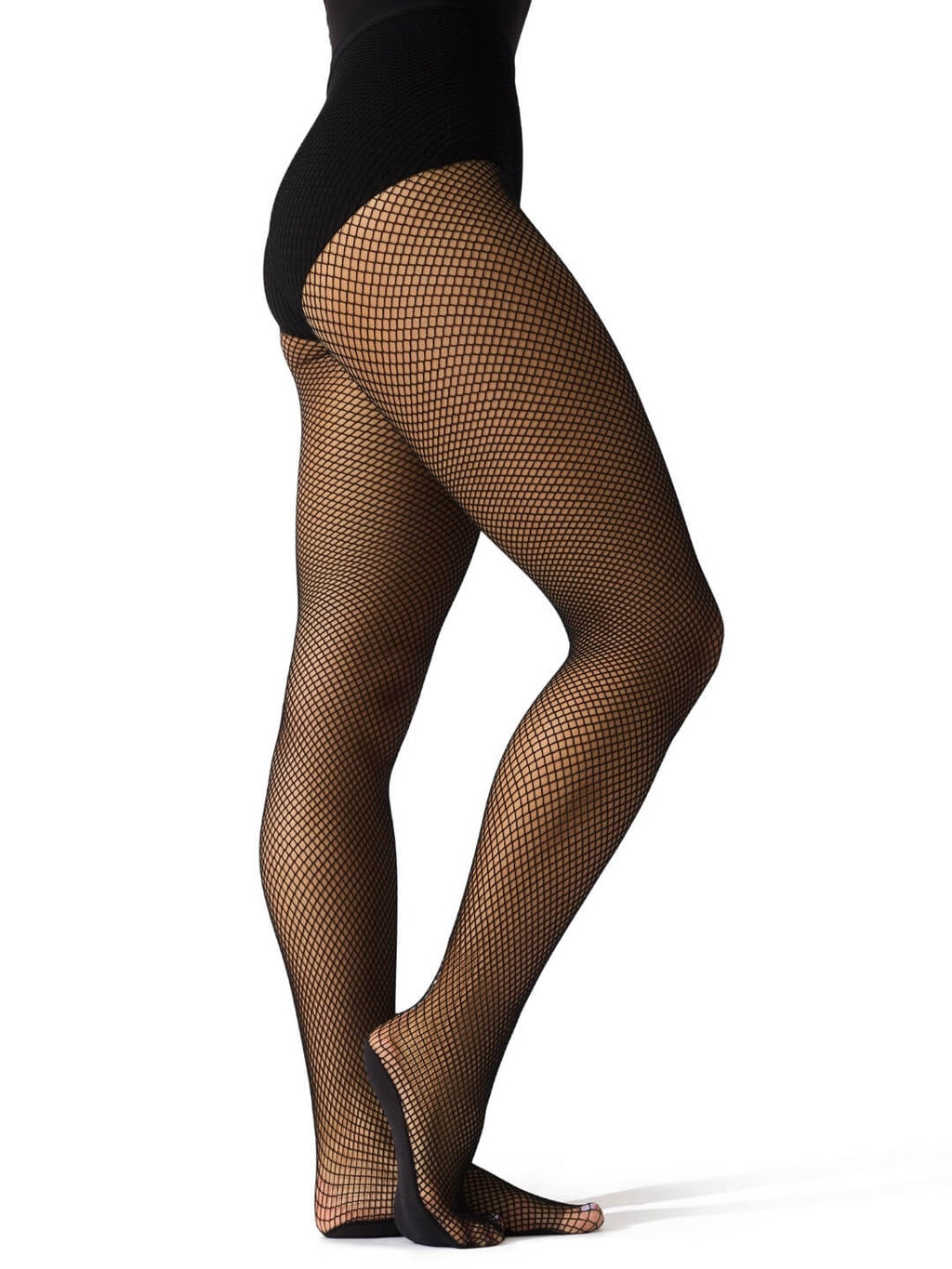
Black Fishnet Tights For Women

Shop black fishnet tights for women to complete your dancewear for rehearsal and performance. Explore the selection of fishnet hosiery, and compare available sizes and product details to find the coverage and fit that work with your leotards and dance bottoms.

FILTERS

0 ITEMS
GRID VIEW:
Black fishnet tights for women bring stretch and flexible coverage to dance training, rehearsals, and performance. Their open-knit construction moves with the legs through extensions, turns, and changes of direction. Unlike opaque tights, fishnets use a repeating mesh pattern rather than a continuous layer of fabric. That structure makes the size of the openings, the elasticity of the yarn, and the finish at the waist and feet important considerations. Nylon and spandex are common materials in dance fishnets. Nylon contributes strength, while spandex helps the fabric stretch and recover as the dancer moves. Fiber content and construction vary, so the material description helps explain how a pair is intended to perform. A close, even fit keeps the mesh distributed across the legs without excess fabric gathering behind the knees or around the ankles. Black also works with many rehearsal and performance requirements, making these tights a practical choice when a consistent color is part of the dress code. Dancers may wear them for jazz, tap, musical theater, or other choreography that calls for fishnet legwear. Suitability depends on the movement, footwear, and requirements of the class or production. A rehearsal with repeated deep lunges places different demands on tights than a short stage appearance. Both call for enough stretch to move without pulling at the waistband or restricting the hips. Mesh density also changes how the fabric feels against the skin and how readily it catches on nearby surfaces. Smaller openings and larger openings are construction choices, not automatic measures of quality or durability. Yarn strength, finishing, fit, and handling all contribute to wear. The wider category of Fishnet Dance Tights provides context for comparing these details. For dancers building a dependable rotation of legwear, the priority is a pair that meets the activity’s requirements and stays comfortable throughout the movement.

Fit is central to how black fishnet tights perform. The mesh should stretch evenly without feeling pulled to its limit, and the waistband should stay secure without digging into the body. Dance tights sizing does not always match everyday clothing sizes. Height and weight often guide the size range, while measurements and construction details can help clarify the fit. Leg length matters because a pair that feels comfortable while standing may pull downward during a high extension or a deep plié. More stretch does not necessarily make a smaller size suitable. Overstretched mesh can place extra tension on the openings, seams, and waistband, increasing discomfort and stress on the fabric. A suitable size allows the tights to follow the body while leaving room for a full range of movement. Waistband height and construction also affect comfort beneath a leotard, fitted shorts, or other dance apparel. A dancer spending several hours in rehearsal may notice a narrow band or a bulky seam more than someone wearing tights for a brief performance. Foot construction deserves the same attention. Footed tights extend through the dance shoe, while footless styles leave the foot uncovered. Any reinforced or solid-knit sections can change the feel beneath the toes and sole, so those details should match the footwear and intended use. Fishnet tights do not replace the support, protection, or fit provided by an appropriate dance shoe. Inside close-fitting footwear, excess material can gather and create pressure. The fabric should lie evenly rather than bunch around the toes or heel. Compatibility matters during tap combinations, quick jazz direction changes, and choreography that repeatedly bends and straightens the knees. Each movement can reveal pulling that is less noticeable at rest. A few controlled pliés, lunges, and leg lifts can help assess comfort before a full rehearsal. For group performances, matching the required mesh pattern, color, and foot coverage also helps dancers meet the same wardrobe standard. Those requirements are worth confirming before choosing tights, especially when several people need consistent legwear for the same routine.

Durability starts with construction, but everyday handling has a strong effect on how long fishnet tights remain useful. Open mesh can catch on fingernails, rings, rough benches, shoe hardware, and hook-and-loop fasteners. A small snag may distort an opening or damage a strand, even when the fabric otherwise has plenty of stretch. Smooth hands and clear surfaces help protect the knit while dressing. Gathering each leg gently and easing the fabric upward distributes tension more evenly than pulling from the waistband. The same care matters when removing tights after rehearsal, particularly if the mesh has caught around the toes or inside a shoe. Washing instructions should always follow the care label because fiber blends and finishes differ. When the label permits hand washing, gentle handling with mild detergent can reduce unnecessary stress on the knit. Thorough rinsing removes detergent residue, and pressing out water without twisting helps avoid stretching the fabric unevenly. Machine washing, when permitted, calls for protection from zippers, hooks, and other rough components in the load. Drying methods also depend on the label. Excessive heat can affect elastic fibers, so a permitted air-drying method may help preserve stretch and recovery. Tights should dry fully before storage and stay separate from accessories that could catch the mesh. For dancers moving between a studio and a performance venue, a dedicated soft pouch keeps legwear away from shoe edges and loose hardware inside a dance bag. Regular checks at the toes, waistband, and seams can identify areas that need attention before the next wear. A spare pair can also prevent a snag from interrupting preparation for a performance. Black fishnet tights can make a useful gift for an adult dancer when the giver knows the correct size and any class or production requirements. Fit preferences and sensitivity to seams are personal, so those details matter more than choosing by appearance alone. Whether selected for regular rehearsal or a specific performance, well-chosen tights support a straightforward goal: dependable legwear that lets the dancer focus on the work.

FAQ