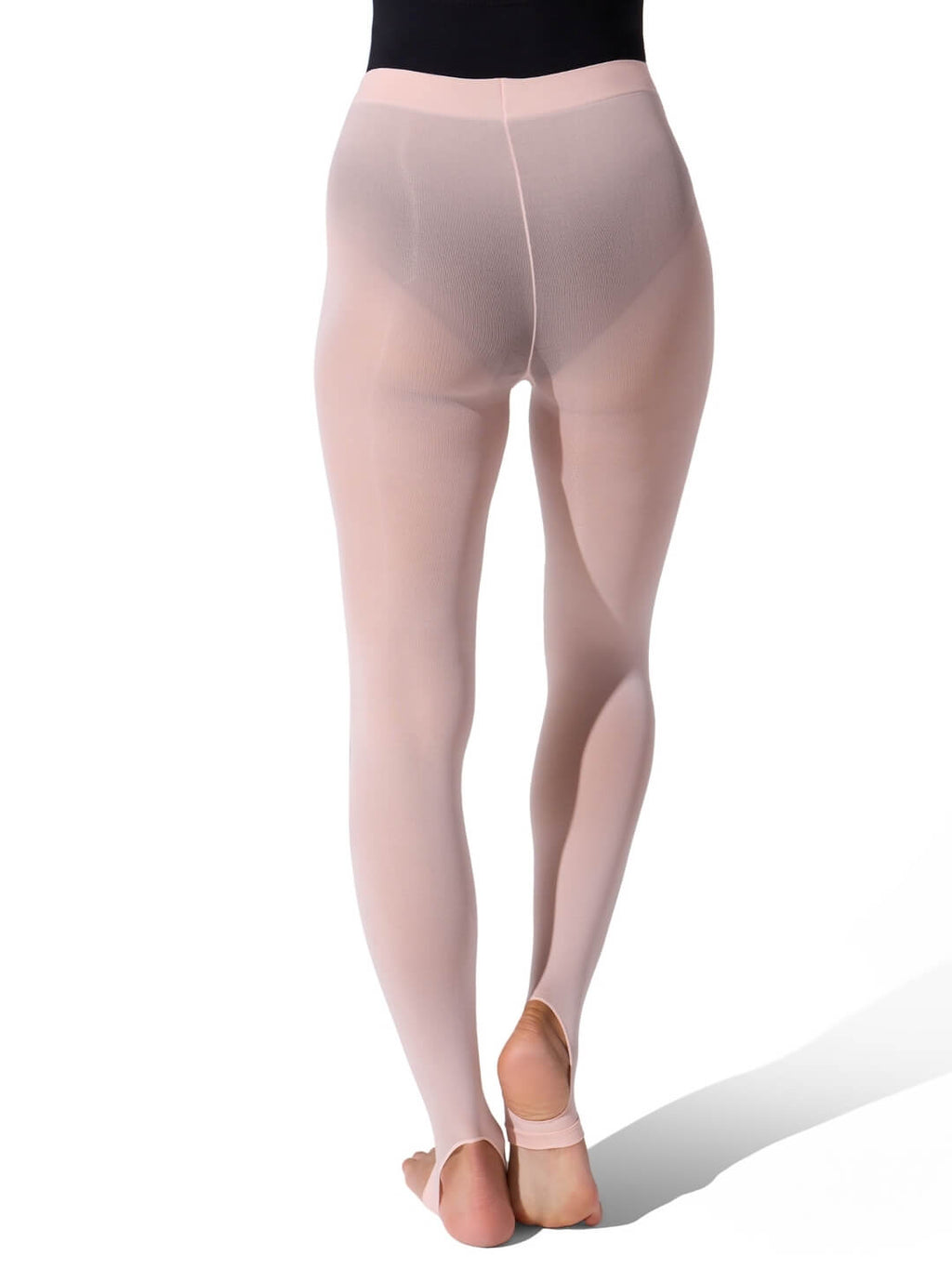
Nylon Stirrup Tights

Nylon stirrup tights deliver reliable support and flexibility for dancers who need unrestricted movement. Designed for performance, these tights offer a secure fit that adapts to a range of motion, making them ideal for classes, rehearsals, and stage work. The stirrup design helps maintain alignment while allowing direct contact with footwear or the floor, supporting precise technique. Built for durability and comfort, nylon stirrup tights are an essential choice for dancers seeking consistent performance through every session.
Read More

FILTERS

0 ITEMS
GRID VIEW:
Nylon stirrup tights provide close-fitting leg coverage while leaving the heel and forefoot exposed. A fabric band passes beneath the arch to help keep the legs in place through movement. This construction gives dancers an alternative to footed tights when choreography calls for direct contact between parts of the foot and the floor. Nylon is commonly blended with spandex to combine a smooth, lightweight feel with stretch and recovery. Nylon contributes strength to the knit, while spandex helps the fabric extend through deep pliés, lunges, and leg extensions, then return toward its original shape. The exact balance depends on the fiber percentages and construction, so the word “nylon” alone does not describe how every pair will feel or perform. A finer knit may provide lighter coverage, while a denser construction may feel more substantial against the body. Softness, opacity, and breathability also vary, and moisture-wicking performance should be confirmed in the fabric details rather than assumed from the fiber name. Stirrup tights are used for contemporary, modern, and jazz dance, along with some ballet training and movement-based workouts where the instructor permits them. For floorwork, the covered leg and exposed foot serve different purposes: fabric provides a layer between the leg and the surface, while the open heel and forefoot allow those areas to make direct contact. That contact does not guarantee traction, since floor finish, moisture, and technique all affect grip. The band beneath the arch also means stirrup tights do not provide a completely bare sole. Dancers comparing fabric options can explore Spandex Stirrup Tights and consider the full fiber blend, stretch, and fit rather than treating nylon and spandex as mutually exclusive choices. For class, rehearsal, or stage work, the most useful construction is the one that supports the required movement without repeated adjustment.

A secure fit allows nylon stirrup tights to move with the dancer without restricting the hips, knees, or ankles. Height and weight charts provide a starting point, but torso length, leg length, and body proportions also affect how the garment sits. Everyday clothing size is not always a reliable substitute for the manufacturer’s measurements. The waistband should stay in place during bends and extensions without digging in or requiring constant repositioning. At the top of the legs, the fabric should sit fully into place rather than hanging low and pulling against each step. Excess length can gather behind the knees or around the ankles, while insufficient length may create tension between the waist and the stirrup. The underfoot band should rest beneath the arch, not bunch beneath the heel or pull toward the toes. A simple sequence of pliés, tendus, and relevés can reveal whether the fabric stretches comfortably and whether the opening stays positioned as the foot changes shape. Seams and edges deserve attention here, especially for dancers who repeat the same movement for extended periods. Pressure that seems minor while standing may become distracting during a long rehearsal. Waistband width, seam placement, and knit texture are useful considerations for dancers with particular comfort preferences. Coverage matters as well: fabric can become more transparent when stretched, so an appropriate size supports both freedom of movement and consistent coverage. Nylon stirrup tights can be worn with a leotard or other permitted practice layers, provided the combination does not create bulky folds or restrict motion. When dance shoes are required, the tights should sit smoothly inside them without changing the intended fit. They do not replace footwear required by a teacher or venue. Class dress codes and performance requirements may specify the tights’ color and finish, making those details practical considerations alongside material and construction.

Durability depends on the quality of the knit, a suitable fit, and consistent care. Nylon contributes strength, but stretch tights can still snag on rough surfaces, jewelry, fasteners, or sharp nails. Taking a little time to put them on helps protect the fabric before training begins. Gathering each leg and easing it upward distributes tension more evenly than pulling hard from the waistband. The stirrup opening should be positioned carefully around the foot so its edges are not stretched abruptly. During floor-based work, abrasive surfaces can wear the fabric at contact points such as the knees, so the studio surface and choreography matter when choosing legwear. Tights provide coverage, not impact protection, and should not be treated as a substitute for knee pads when those are needed. After wear, follow the care label for the specific fiber blend. Gentle washing with a mild detergent helps remove perspiration and body oils without unnecessary abrasion. If machine washing is permitted, a mesh laundry bag can help separate delicate fabric from hooks and fasteners. Avoid bleach and high heat unless the care instructions explicitly allow them, since harsh treatment can affect stretch fibers and shorten the garment’s useful life. Squeeze out water gently rather than twisting the tights, and let them dry fully before storing them away from rough accessories. Regular checks around the arch band, seams, and waistband can identify thinning fabric or damaged stitching before the next class. Keeping a clean spare pair in a dance bag can prevent a snag or forgotten wash from interrupting rehearsal preparation. For beginners, reliable fit makes it easier to focus on placement and coordination rather than clothing adjustments. Experienced dancers may place greater emphasis on how the knit handles repeated movement and how the stirrup sits during specific choreography. Nylon stirrup tights can also be a practical gift for a dancer when the recipient’s size, preferred construction, and studio requirements are known. Across those uses, the priorities remain consistent: comfortable stretch, secure positioning, appropriate coverage, and care that preserves performance through repeated wear.
Read More

FAQ